So, this is the end of my adventures for now. I'm in the computer room at the Dilijan Resort Hotel in Dilijan, Armenia. Dilijan is one of the only woodsy places left in Armenia, and it is really beautiful. I met Dutch backpackers a few days ago, have made friends with every waiter, bartender and bellhop in the hotel, and had a few minor adventures. Finals were finished in Yerevan, and my last paper (detailing the Armenian constitution and democratic process, and the corruption therein) was turned in at 5:00 pm today. I spent far too many hours hanging around the bar with a friend and most of the waitstaff, hanging out and trying to understand people who don't really speak english- made me a bit nostalgic. Despite the fact that far fewer Armenians speak english than Turks, I've spent 99% of my time around my Americans classmates, several of whom speak Armenian, so I've had no real need or opportunity to practice the language until last night. Frustrating, because I know if I had a week or so of the amount of practice I got in one night, I'd probably know as much Armenian as Turkish... shat vat e. But too late now. We leave the hotel around 5:30 tomorrow morning for the Yerevan airport, maybe 1.5-2 hours away. From there, it's a long flight to Charles De Gaulle airport and then a longer one to Logan, then a ride on the T, the na five hour bus ride, then a 45 minute drive, then I'm home.
I must admit, in true anxiety-ridden Katie style, I am really nervous about coming home. I know everyone and everything has changed, even if only a little. And I know I've changed, and not just a little. I feel so much more tolerant, more understanding, even (gasp) more patient... more levelheaded. Things like communicating solely in hand signals, crossing eight lane highways on foot, dancing in public, being constantly misunderstood, and meeting new and different people every day have become my norm. Frustrating sometimes, dangerous sometimes, exciting always. I've picked up a few weird habits, two languages, a half dozen good, permanent friends, and innumerable absurd stories. Part of me can't wait to come home and see my siblings and how much they've grown. I remember how long seven months is when you're 17 or 15 or 13 or 11, how much your perspective/style/attitude/friends/interests can change. I genuinely look forward to getting to know them again. I can't wait to catch up with EVERYONE, hear stories and laugh and remember why we've always been so close. I'm dreadfully out of touch with pop culture, current music and movies and tv shows. I don't look forward to reverse culture shock- trying to cope with everyone speaking english, with fast food, with the individuality and lack of community that really defines America. Why do you think the only place in the world with "greek life" - frats and sororities and all the drama that goes all with them- is the USA? Because we lack on a fundamental level the sense of connection and belonging that comes with a real sense of community. I have family, and friends, and coworkers, and classmates, but I have no community. No group of people who know me and keep track of my actions and have an interest in my life, though they don't really know me or have any right pay such close attention. It seems terrible, like overbearing parents with a "big brother" eeriness, but only to American sentiments. And I'm really going to miss it.
Wednesday, August 5, 2009

Friday, July 24, 2009
It gets dark a little sooner, now
Today I visited Tsitsernakaberd. For the uninformed, "tsitsernakaberd" is Armenian for "Fortress of small swallows." It is the national memorial to the Armenian genocide, located close to my home in Yerevan. It is moving and elegant, bringing tears to the eyes of my Armenian-American classmates. There is a tall spike, an eternal flame, and a small museum dedicated to photographs, print, and statistical evidence of the genocide that took place in Eastern Turkey from 1915-1918. In Turkey, it is known as the "Armenian Relocation" or "Deportation of the Armenians," which they claim to be the mass deportation of the Armenian people to the Syrian desert as a result of skirmishes between the Armenian and Turkish peoples- skirmishes that resulted in deaths on both sides, which is why they insist on calling it a war, not a genocide. The politics are complicated, regardless of what the Turkish government or Armenian Diaspora (the politicultural group of people of Armenian descent living all over the world) might wish one to believe.
But this is background information.
Today was difficult. It is never easy to stand witness, even nearly a century later, to atrocities. It is even more difficult because I have come to know, and adore, the descendents of the perpetrators. Now, nobody hates the Germans for the Holocaust. But in Germany, it is a crime to deny the genocide- in Turkey, it is a crime not to (it is under the law criminalizing "insulting Turkishness"). It's difficult to know that so many people are so angry at a group of people that I've come to love. It's difficult because all the people I knew had no part in the genocide, and were taught from an early age that it did not happen. How can anyone fault them for believing what every teacher, every mentor, everyone they know has told them that it is a cruel lie designed to dishonor their grandparents and great grandparents? At the same time, I look at the memorial and want to shake people, my own government and every other one that has not recognized the genocide for what it was- a horrible attempt to destroy an ancient group of people. Politics are never clear or staightforward, and solutions are never easy.
I've spoken with the Armenian foreign policy advisor, the deputy Minister of Justice, the US Ambassador, and several other high-ranking political persons here in Armenia. No one has any more answers than I do.
But this is background information.
Today was difficult. It is never easy to stand witness, even nearly a century later, to atrocities. It is even more difficult because I have come to know, and adore, the descendents of the perpetrators. Now, nobody hates the Germans for the Holocaust. But in Germany, it is a crime to deny the genocide- in Turkey, it is a crime not to (it is under the law criminalizing "insulting Turkishness"). It's difficult to know that so many people are so angry at a group of people that I've come to love. It's difficult because all the people I knew had no part in the genocide, and were taught from an early age that it did not happen. How can anyone fault them for believing what every teacher, every mentor, everyone they know has told them that it is a cruel lie designed to dishonor their grandparents and great grandparents? At the same time, I look at the memorial and want to shake people, my own government and every other one that has not recognized the genocide for what it was- a horrible attempt to destroy an ancient group of people. Politics are never clear or staightforward, and solutions are never easy.
I've spoken with the Armenian foreign policy advisor, the deputy Minister of Justice, the US Ambassador, and several other high-ranking political persons here in Armenia. No one has any more answers than I do.
Tuesday, July 14, 2009
Culture Shock Strikes Back
Annum's Katie'e, yes Amerikatsi em, usough em Hayastanum... ama Türkiye çok ozledim.
Probably one of the more rare language combinations... Armenkish? Turkenian? It's the easiest example of my current bizarre strain of culture shock. Although suddenly living with and being constantly surrounded by 13 other American students who are all continually speaking in English and making pop culture references and talking in 4 syllable words about Ameican politics and foreign policy is a whole separate (and completely exhausting) culture shock issue. But as for Armenia and Turkey, they are far more similar than they would ever admit, but there are enough differences to keep my on my toes. A breakdown:
Language:Armenian and Turkish, despite being sandwiched together for over a millenia, have almost nothing in common. I've found two words that are similar: "nargile" meaning hookah, and "peynir" meaning cheese. They also both have the "click" that means no, but the Armenian click is more subtle and less definite. But the grammatical structure, pronunciation, and vocalizations are completely different- Armenians even have their own alphabet (unbelievably frustrating). More interestingly, in the same way the Turkey has many people who speak a bit of English, simply because they studied at some point in school, Armenia is filled with people who know a smattering of Russian- logical, since it is a state only 17 years free of the Soviet yoke.
Religion: Obviously, Turkey is Muslim and Armenia is Christian. But as far as my experiences go, Armenians seem to take religion far more seriously than most Turks I met- granted, I spent most of my time in Ankara and Istanbul, major modern cities, rather than the more conservative, religious villages in the southeast. But on the same token, I'm currently in Yerevan- the capital, albeit tiny, city and arguably most progressive part of Armenia. I got to visit Khor Virab, a 1600+ year old church on the Turkish-Armenian border, with a beautiful view of Mt Ararat (think Noah). I also attended Sunday morning service at an Armenian Apostolic Church, which was quite an experience. Very serious, very decorous, very intense. Supposedly somewhat similar to Russian or Greek Orthodox, there was a lot of chanting and I've never crossed myself more often in a 2 hour span in my life.
Personal Space: It's been endlessly entertaining to me to watch the other Americans (particularly boys) here get squeamish about personal space- and not even invasions of their own, just other people touching or kissing each other casually. For me, Armenia has been strange because they are FAR more reserved than Turks. They greet each other with a kiss on one cheek, rather than two, and often it's an air kiss. They don't generally hold arms, although women here interlock fingers more often. Armenians don't smile as much, or laugh- especially in public, they are extremely reserved and formal. Turks also stare much more- I've only noticed people staring once or twice here, like on public transit, because I'm completely used to it. My classmates complain that they feel like they are constantly being stared at... I think the main difference lies in that when you catch an Armenian staring at you, they look away, and when they talk about you, they hide their mouths behind their hands. Turks as a rule are much more blatant, and definitely have no problems maintaining eye contact.
Appearance: Very similar. Like the staring thing, I no longer notice unibrows. Seriously, not at all. They're pretty common, which amuses my classmates, but I didn't even realize what they were referring to when we first arrived and they commented on the hairiness and such of people here. If I could average the country out, I'd say Armenians are a bit lighter than Turks, but I've met blond Turks and extremely dark Armenians, so there's really no rule here. Turks are more concerned with fashion and hairstyles, and take more fashion risks, whereas Armenian men wear more hats, women wear higher heels, and clothes are FAR more revealing- the amount of skin I saw during church was absolutely distracting. (What's that? Oh yes, I did just spend six months in a {mostly} conservative Muslim country)
History: Well obviously both groups have been in the area a while, and have had very different experiences. But what I've found more fascinating is that both nationalities have an obsession with their history and ethnicity. Turks are TURKISH, and they obsess about Ataturk. Armenians are ARMENIAN, and obsess over their historic lands. Among other things. But it's a bit like seeing a familial trait- similar to how my father and his brothers enjoying delving into geneaology, both Turks and Armenians have an eye focused intently on the past.
Food: Doner. Lahmacun. Ayran. Even Beypazari sucuk. Unbelievably delicious produce, including cucumbers, tomatoes, apricots and sour cherries. Turkish food is still my favorite (no iskender, kokorec, manti or midye here), but it's really not too far off. The amount of ham is a bit weird, and my stomach definitely reacted strangely to it at first. Also, Ankara was filled with American fast food places- McDonalds, Burger King, KFC, Pizza Hut, Dominoes, Arby's, Starbucks. I haven't seen a single familiar food name since I've been here. My guess would be Armenia's Soviet past- for all I know, half the restaurants with Russian signs are well known chains in Moscow. (Reallllly starting to wish I had taken Russian lessons from my ex-roommate in Ankara.)
Like I said, I miss Turkey. A lot. I'm trying not to hang out too much in my Turkish bubble (populated by me, my Turkish friends and students' facebooks, & my collection of Turkish music), but it's tempting- especially since the alternative is a herd of Americans, and nobody likes that. My classmates are just starting to understand my adoration of this part of the world, although I'm 100% aware that if I tell one more story that starts with "Well this one time in Turkey..." they will duct tape me into a closet and leave me there for the next 3 weeks. It's strange, sort of knowing what to expect and sort of not. The insane driving, irregular power and water, and the idea of communicating complicated thoughts without speaking a common language is all very familiar to me... but cultural details are very different.
I've visited an art museum, a historic cultural landmark, attended a week of classes, and picked up bits of the language... yet I've only met one Armenian who was not introduced to me as a tour guide or teacher, fluent in English language and customs. One. Such is the American bubble.
Probably one of the more rare language combinations... Armenkish? Turkenian? It's the easiest example of my current bizarre strain of culture shock. Although suddenly living with and being constantly surrounded by 13 other American students who are all continually speaking in English and making pop culture references and talking in 4 syllable words about Ameican politics and foreign policy is a whole separate (and completely exhausting) culture shock issue. But as for Armenia and Turkey, they are far more similar than they would ever admit, but there are enough differences to keep my on my toes. A breakdown:
Language:Armenian and Turkish, despite being sandwiched together for over a millenia, have almost nothing in common. I've found two words that are similar: "nargile" meaning hookah, and "peynir" meaning cheese. They also both have the "click" that means no, but the Armenian click is more subtle and less definite. But the grammatical structure, pronunciation, and vocalizations are completely different- Armenians even have their own alphabet (unbelievably frustrating). More interestingly, in the same way the Turkey has many people who speak a bit of English, simply because they studied at some point in school, Armenia is filled with people who know a smattering of Russian- logical, since it is a state only 17 years free of the Soviet yoke.
Religion: Obviously, Turkey is Muslim and Armenia is Christian. But as far as my experiences go, Armenians seem to take religion far more seriously than most Turks I met- granted, I spent most of my time in Ankara and Istanbul, major modern cities, rather than the more conservative, religious villages in the southeast. But on the same token, I'm currently in Yerevan- the capital, albeit tiny, city and arguably most progressive part of Armenia. I got to visit Khor Virab, a 1600+ year old church on the Turkish-Armenian border, with a beautiful view of Mt Ararat (think Noah). I also attended Sunday morning service at an Armenian Apostolic Church, which was quite an experience. Very serious, very decorous, very intense. Supposedly somewhat similar to Russian or Greek Orthodox, there was a lot of chanting and I've never crossed myself more often in a 2 hour span in my life.
Personal Space: It's been endlessly entertaining to me to watch the other Americans (particularly boys) here get squeamish about personal space- and not even invasions of their own, just other people touching or kissing each other casually. For me, Armenia has been strange because they are FAR more reserved than Turks. They greet each other with a kiss on one cheek, rather than two, and often it's an air kiss. They don't generally hold arms, although women here interlock fingers more often. Armenians don't smile as much, or laugh- especially in public, they are extremely reserved and formal. Turks also stare much more- I've only noticed people staring once or twice here, like on public transit, because I'm completely used to it. My classmates complain that they feel like they are constantly being stared at... I think the main difference lies in that when you catch an Armenian staring at you, they look away, and when they talk about you, they hide their mouths behind their hands. Turks as a rule are much more blatant, and definitely have no problems maintaining eye contact.
Appearance: Very similar. Like the staring thing, I no longer notice unibrows. Seriously, not at all. They're pretty common, which amuses my classmates, but I didn't even realize what they were referring to when we first arrived and they commented on the hairiness and such of people here. If I could average the country out, I'd say Armenians are a bit lighter than Turks, but I've met blond Turks and extremely dark Armenians, so there's really no rule here. Turks are more concerned with fashion and hairstyles, and take more fashion risks, whereas Armenian men wear more hats, women wear higher heels, and clothes are FAR more revealing- the amount of skin I saw during church was absolutely distracting. (What's that? Oh yes, I did just spend six months in a {mostly} conservative Muslim country)
History: Well obviously both groups have been in the area a while, and have had very different experiences. But what I've found more fascinating is that both nationalities have an obsession with their history and ethnicity. Turks are TURKISH, and they obsess about Ataturk. Armenians are ARMENIAN, and obsess over their historic lands. Among other things. But it's a bit like seeing a familial trait- similar to how my father and his brothers enjoying delving into geneaology, both Turks and Armenians have an eye focused intently on the past.
Food: Doner. Lahmacun. Ayran. Even Beypazari sucuk. Unbelievably delicious produce, including cucumbers, tomatoes, apricots and sour cherries. Turkish food is still my favorite (no iskender, kokorec, manti or midye here), but it's really not too far off. The amount of ham is a bit weird, and my stomach definitely reacted strangely to it at first. Also, Ankara was filled with American fast food places- McDonalds, Burger King, KFC, Pizza Hut, Dominoes, Arby's, Starbucks. I haven't seen a single familiar food name since I've been here. My guess would be Armenia's Soviet past- for all I know, half the restaurants with Russian signs are well known chains in Moscow. (Reallllly starting to wish I had taken Russian lessons from my ex-roommate in Ankara.)
Like I said, I miss Turkey. A lot. I'm trying not to hang out too much in my Turkish bubble (populated by me, my Turkish friends and students' facebooks, & my collection of Turkish music), but it's tempting- especially since the alternative is a herd of Americans, and nobody likes that. My classmates are just starting to understand my adoration of this part of the world, although I'm 100% aware that if I tell one more story that starts with "Well this one time in Turkey..." they will duct tape me into a closet and leave me there for the next 3 weeks. It's strange, sort of knowing what to expect and sort of not. The insane driving, irregular power and water, and the idea of communicating complicated thoughts without speaking a common language is all very familiar to me... but cultural details are very different.
I've visited an art museum, a historic cultural landmark, attended a week of classes, and picked up bits of the language... yet I've only met one Armenian who was not introduced to me as a tour guide or teacher, fluent in English language and customs. One. Such is the American bubble.
Sunday, July 5, 2009
Countdown
So it's down to the final 10 hours... It's so difficult to say goodbye. Technically I've finished saying goodbye to everyone I know- most of whom are in Ankara. But I'll miss Turkiye like an old friend. One that I didn't like much at first, didn't trust, didn't understand... but given a lot of time and patience, we're now thick as thieves (wait, did I just describe Turkiye or Alex Budge? =P ) I love the culture here, the eccentricities and customs that once seemed so foreign. Midye and kokorec at 3 in the morning, misir (corn on the cob) on every street corner, gypsies and tissue kids and shoe-shiners. I'll even miss TOBB, and some of the awesome people I've been lucky enough to get to know. I've learned a lot about the world, about myself, and about other people.
I've learned that more often than not, words are irrelevant to communication.
I've learned some people will respect you for who you are, and some people won't, and often you have no choice in the matter.
I've learned I can't control other people, I can't always change my situation, but whether I have fun is completely my decision.
I've learned the worst experiences can make the best stories.
I've learned a whole lot more, but my internet is running out. I promise to add on to this when I get a chance!
I've learned that more often than not, words are irrelevant to communication.
I've learned some people will respect you for who you are, and some people won't, and often you have no choice in the matter.
I've learned I can't control other people, I can't always change my situation, but whether I have fun is completely my decision.
I've learned the worst experiences can make the best stories.
I've learned a whole lot more, but my internet is running out. I promise to add on to this when I get a chance!
Tuesday, June 23, 2009
Far too long
So, so much has happened recently that I'm not sure how I'll ever manage to talk about it all. Suffice it to say that May and June have been filled with adventures- some better than others. A woefully inadequate recap:
May 7-10: Trip to Gaziantep. Alex and I hung out in Antep for a weekend, visited a school, factory, hospital, bird preserve, and museum, all run by SANKO, a Turkish conglomerate. We saw kelaynak, an endangered (and kind of ugly) species of bird, learned about the Zeugma civilization, saw how towels are made, ate Ottoman-style food, played in the Euphrates river, and hung out at a private elementary school with about as much money as my university. We bonded with a bunch of the people all the trip, all university students from Ankara or Istanbul. The best part was we didn't have to apply to the program or pay for any of it- our employer pulled a few strings- although, as expected, everything was in turkish.
The next week was filled with festivals. I went to two nights of Gazi University's festival, and saw Magda (really cool turkish rock band), and got pushed aside by a girl wearing a headscarf and bondage pants. The next night was some mediocre chick who wasn't wearing any clothes- think Britney gone Turkish. I tried kokoreç, (roasted sheep intestines- a turkish specialty), with ayran for the first time, which was actually very very good. I also tried midye, mussels with rice and lemon squeezed over them, sold on almost every street from 9-1:00 am. Even better than kokoreç. I am going to miss this country.
That weekend was TOBB's festival, from Friday to Sunday, where I got to hang out with students, listen to Turkish music, play on a huge trampoline, and just generally goof off. I also learned how to dance Turkish-ly, which involves holding pinkies while standing in a circle, then stepping three times and sticking a foot out, (think bar mitzvah, not hokey-pokey), not to any particular beat. Then repeat. Sometimes the guy on the end twirls a napkin.
Since then, Alex and I brought our Muslim friends, who we hung out with on Easter, to church with us, and visited their mosque (camii, in Turkish, or "Mos-Q" when they pronounce it in English). I received declarations of undying love from two of my students, and played (life-size) chess for the last time with a good friend I'll leave behind. Alex and I taught two weeks of classes, after six weeks without, then had our last week off. We've spent time with a dozen different friends, saying goodbyes with picnics and giving away various things- our Brita water filter to one friend, the coffeemaker to another. We took photos, but not nearly enough.
I'll miss them, students and coworkers and friends. Teasing my students on their english, and hearing them roar with laughter when I try to chide them in Turkish- whether at my pronunciation or just the idea of me speaking their language, I don't know. I'll miss the woman who looks no older than I am, who cleans my desk and empties my trash every day, and the man (nicknamed Merhaba) who makes deliveries and has a constant smile. My officemates, Faruk joking and talking to me in rapid Turkish, and Nesrin smiling and complimenting me, and Nurcihan willing to listen to my petty complaints and act sympathetic, even when I didn't deserve it. Fatih, the much put-upon recordings person, with a full load of classes, two whiny native speakers, and a bit of a midlife crisis on top. And all the great people I've met or gotten to know over the last month- friends of the last native speakers, graduates, students at the real university, the daughter of a diplomat who lived in NYC for six years. Being temporary is one of the hardest experiences of my life- knowing that I'll leave, and no one here will expect to ever see me again. Undying love aside.


Turkish-style picnic with Engin & Ozlem- grilled lamb chops, kofte, chicken, veggies & garlic!


Some favorites: Kutay, and Sevket, Ömer, and Yusuf


Selçuk trying to murder me with a chess piece; and one of my prouder moments- beating Cağkan, mechanical engineer/chess wiz, at his own game
May 7-10: Trip to Gaziantep. Alex and I hung out in Antep for a weekend, visited a school, factory, hospital, bird preserve, and museum, all run by SANKO, a Turkish conglomerate. We saw kelaynak, an endangered (and kind of ugly) species of bird, learned about the Zeugma civilization, saw how towels are made, ate Ottoman-style food, played in the Euphrates river, and hung out at a private elementary school with about as much money as my university. We bonded with a bunch of the people all the trip, all university students from Ankara or Istanbul. The best part was we didn't have to apply to the program or pay for any of it- our employer pulled a few strings- although, as expected, everything was in turkish.
The next week was filled with festivals. I went to two nights of Gazi University's festival, and saw Magda (really cool turkish rock band), and got pushed aside by a girl wearing a headscarf and bondage pants. The next night was some mediocre chick who wasn't wearing any clothes- think Britney gone Turkish. I tried kokoreç, (roasted sheep intestines- a turkish specialty), with ayran for the first time, which was actually very very good. I also tried midye, mussels with rice and lemon squeezed over them, sold on almost every street from 9-1:00 am. Even better than kokoreç. I am going to miss this country.
That weekend was TOBB's festival, from Friday to Sunday, where I got to hang out with students, listen to Turkish music, play on a huge trampoline, and just generally goof off. I also learned how to dance Turkish-ly, which involves holding pinkies while standing in a circle, then stepping three times and sticking a foot out, (think bar mitzvah, not hokey-pokey), not to any particular beat. Then repeat. Sometimes the guy on the end twirls a napkin.
Since then, Alex and I brought our Muslim friends, who we hung out with on Easter, to church with us, and visited their mosque (camii, in Turkish, or "Mos-Q" when they pronounce it in English). I received declarations of undying love from two of my students, and played (life-size) chess for the last time with a good friend I'll leave behind. Alex and I taught two weeks of classes, after six weeks without, then had our last week off. We've spent time with a dozen different friends, saying goodbyes with picnics and giving away various things- our Brita water filter to one friend, the coffeemaker to another. We took photos, but not nearly enough.
I'll miss them, students and coworkers and friends. Teasing my students on their english, and hearing them roar with laughter when I try to chide them in Turkish- whether at my pronunciation or just the idea of me speaking their language, I don't know. I'll miss the woman who looks no older than I am, who cleans my desk and empties my trash every day, and the man (nicknamed Merhaba) who makes deliveries and has a constant smile. My officemates, Faruk joking and talking to me in rapid Turkish, and Nesrin smiling and complimenting me, and Nurcihan willing to listen to my petty complaints and act sympathetic, even when I didn't deserve it. Fatih, the much put-upon recordings person, with a full load of classes, two whiny native speakers, and a bit of a midlife crisis on top. And all the great people I've met or gotten to know over the last month- friends of the last native speakers, graduates, students at the real university, the daughter of a diplomat who lived in NYC for six years. Being temporary is one of the hardest experiences of my life- knowing that I'll leave, and no one here will expect to ever see me again. Undying love aside.
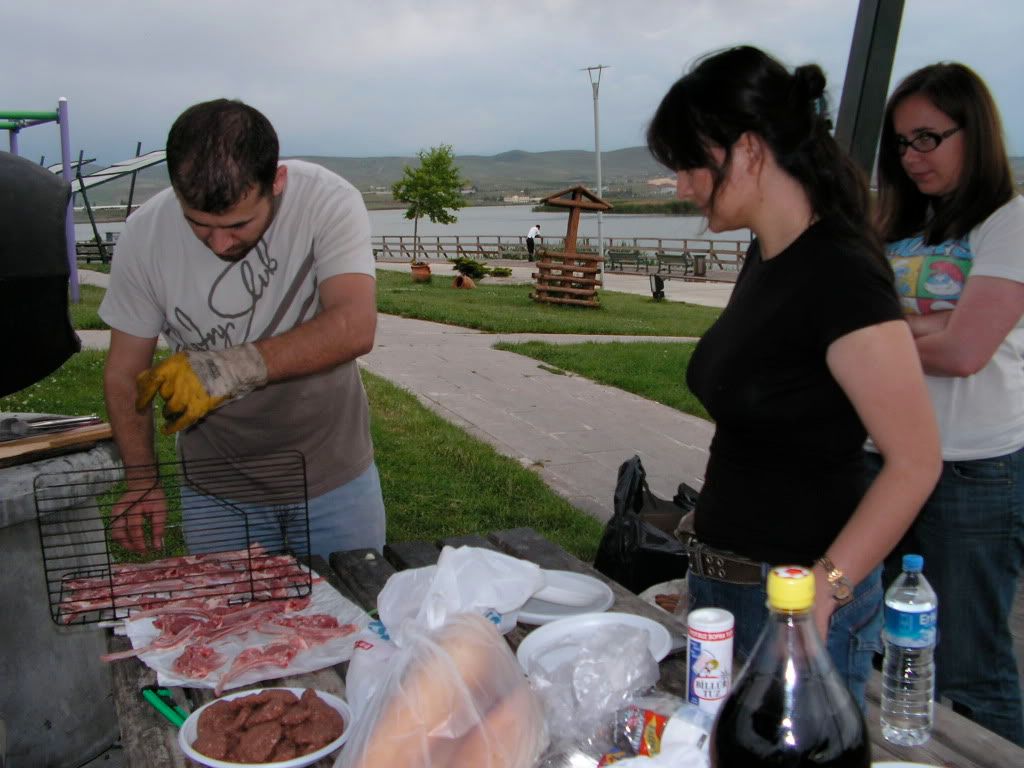
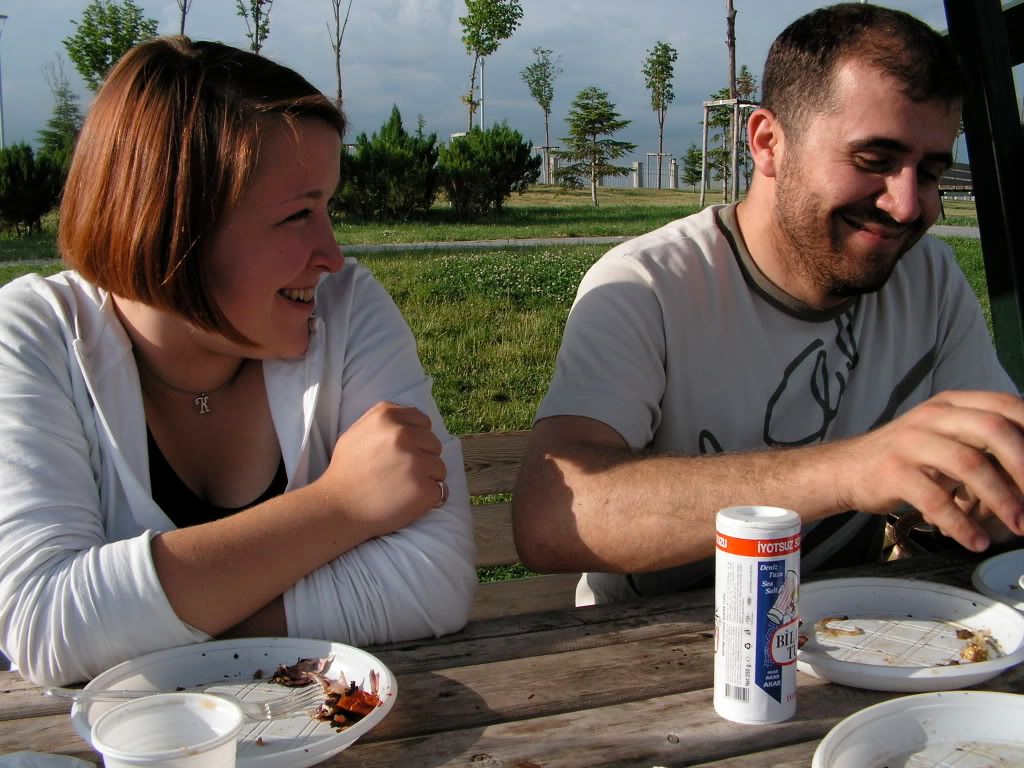
Turkish-style picnic with Engin & Ozlem- grilled lamb chops, kofte, chicken, veggies & garlic!
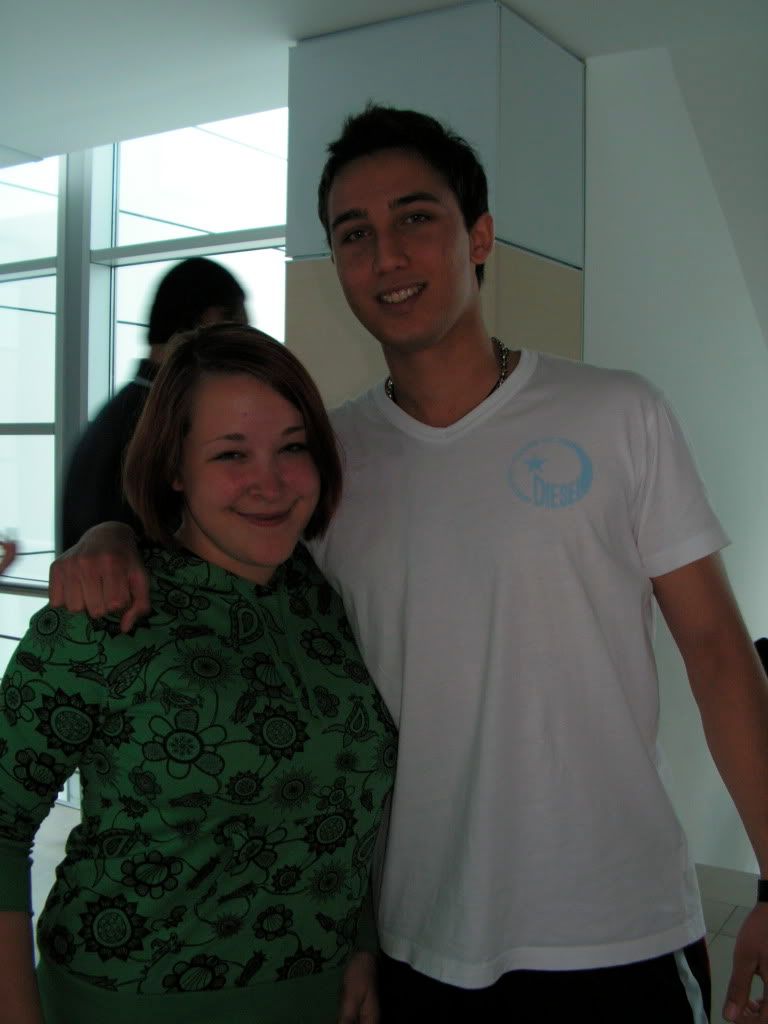

Some favorites: Kutay, and Sevket, Ömer, and Yusuf

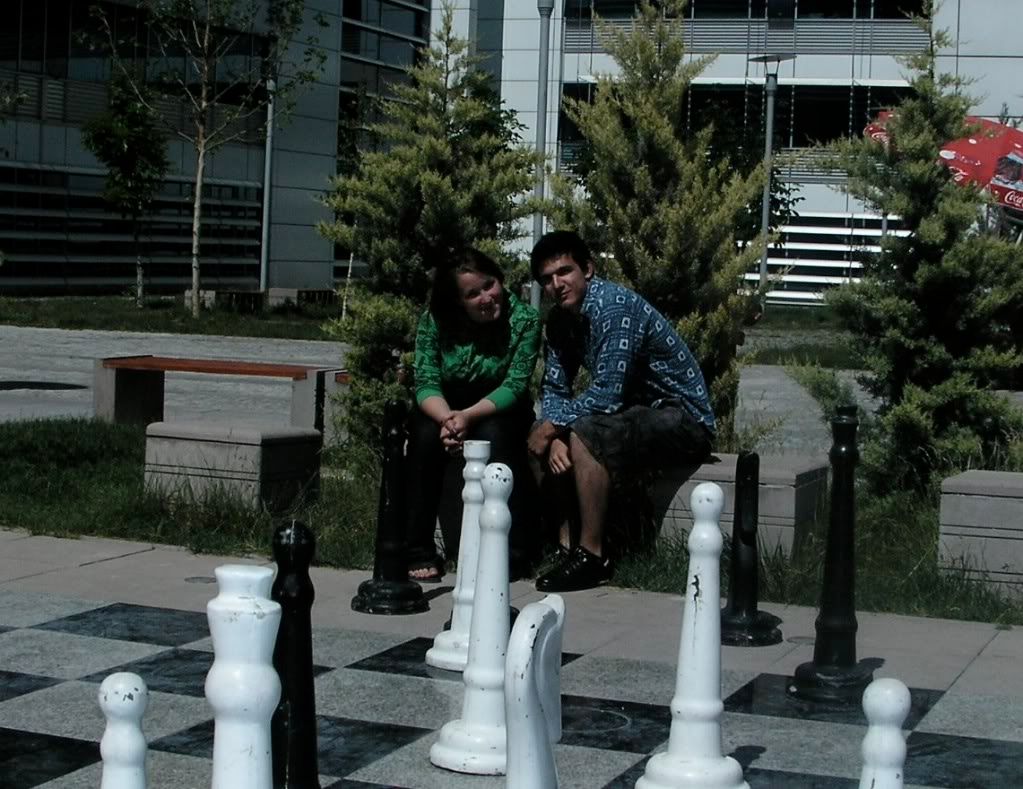
Selçuk trying to murder me with a chess piece; and one of my prouder moments- beating Cağkan, mechanical engineer/chess wiz, at his own game
Monday, May 4, 2009
Islam on Easter, Annem (my mother) in Istanbul
Nearly a month! So much has happened. Easter was wonderful and unexpected- I listened to a bishop (I think? Someone important and Catholic with... well, rather gaudy robes) at mass, painted eggs with Alex, then had wonderful homemade manti with two of our students. I introduced them to peanut butter, and Alex's still-warm apple crisp, and we painted eggs, and watched an interesting video they brought us, a Muslim testimony by an Aussie. The girls asked us about the real meaning of Easter, and we explained everything. They showed us where the Quran mentions Miriam (the Virgin Mary), Gibrail (the angel Gabriel), Isa (Jesus), and several old testament prophets. We talked about faith, the differences and similarities. They also taught Alex and I how to put on headscarves- and giggled the whole time, clearly thrilled that we wanted to learn. It was wonderful to really sit down and hash out God and faith with girls my age, who believe just as sincerely in their lifestyle as I do in mine. No judgment, derision or defensiveness, just people trying to understand each other. I wish everyone could be so lucky.


The next Monday, Alex left in the morning and I took the overnight train into Istanbul to meet my mother. I caught the wrong ferry to the European side of Istanbul, got very lost, and walked for two hours before finding Taksim Square, the location of our hotel. My mother arrived that afternoon, and we took our things back to the hotel before going out. We spent six days in the city, mostly in Taksim and Sultanahmet- the historical area of the city, home to the Hagia Sophia, Blue Mosque, Covered Bazaar and other well-known places, and therefore a terrible tourist trap. I thoroughly enjoyed messing with the locals, most of whom know more English than my students, by replying in Turkish when they spoke to me in English. "Hello! How are you!" "Iyiyim! Siz nasilsiniz?" "O-ha! Turkce biliyorsunuz mi?" "Evet. Ben Ankara'dan!" (I'm good, how are you? - You know turkish? - Yes. I'm from Ankara!) Most of the vendors laughed uproariously at themselves before turning back and attempting to fleece the more-unsuspecting tourists.
A few highlights...
- Of course, the Ayasofya (Hagia Sophia) and the Sultanahmet Camii- know as the Blue Mosque because of its beautiful, individually handpainted Iznik tiles. Iznik, it might be noted, is a city in northwestern Turkey, once known as Nicaea- a name you might know from a famous Christian creed written in the same location.

- The Kapalıçarşı, or Covered (or Grand) Bazaar. We saw this on the same day as the Blue Mosque and Hagia Sophia, on a rather high-speed tour with Alex and her parents. The shops are tiny and claustrophobic, and the shopkeepers are boisterous and friendly, and experts at bargaining- which is both a sport and an art form here. One can buy trinkets of every genre: nargile (hookah, or "water pipes" as they have been translated into English), Iznik tiles, arabic calligraphy, beautiful chess and backgammon sets, jewelry, carpets, headscarves, lamps and pipes and mugs and lighters and more cheaply made knickknacks than I ever want to see again. Alex and I spent a good deal of time fending off the younger vendors, and arguing with the older ones. But between the two of us, we generally worked our way into the "Turkish price" range, rather than the tourist one, and most shopkeepers were so amused with us and our attempts at Turkish haggling (mainly "çok pahalı!" - too expensive!) that they cooperated. Overall, it was very fun- but after an hour or so I was more than ready to get out and breathe a little without being hollered at.
- Topkapı and Dolmabahçe Sarayı - two Ottoman palaces, both beautiful. We saw the main areas, where the sultans worked and lived, as well as the Harems- not exactly the brothel-like image conjured when one thinks of a harem, it was simply the area where the sultan's mother, wives, and younger children lived. Interestingly, the sultan's mother was completely in charge of his (and everyone else's) private life- her quarters were even located between his and his wives', so that she was aware of everything happening in her home. The Sultan may have ruled the Empire, but his mother ruled his bedroom. Not completely surprising, though- Turkish women are not to be messed with.
- Food! My mother got to try all my favorites, from iskender to doner to manti. And of course, the desserts... and not just baklava. It's a terrible shame that of all the fantastic pastries available in every corner shop in Turkey, the only one that's made it across the Atlantic is baklava- not to insult baklava, of course, but really... there's so much more! My mother also had türk kahvesi, turkish coffee, for the first time, in a cafe overlooking the Bosphorus. I introduced her to kahve falı, the tradition of coffee-grind fortunetelling.
- The Cathedral of St Antuan- St Anthony's, a functioning church very close to Taksim, where we attended mass on Sunday with Alex and her parents. The music was familiar, the mass was moving, and it was good for my mother- something the same as home, after a long week of foreign and sometimes frightening experiences. My mother also got to watch a Nigerian man attempt to pick up Alex (or me, or possibly her- he didn't seem to have a particular target) as soon as we left the church.
There were many other fun stories, from arguing football with a taksi driver- he liked Ankaraspor, clearly soft in the head- to the daily conversations with our hotel maid, a soft spoken Turkish man with a kind smile, to the absurd numbers of stray cats that amused my mother to no end, and the friendly stray dog that accompanied Alex and I back to her hotel one night, when a taksi dropped us off a bit further away then we might have liked at that hour of the night.
Our parents returned to the States on Monday morning, and Alex and I met up in Taksim, sat in a cafe for a bit, and decided to catch the hızlı tren, the high-speed train from Istanbul to Ankara, even though I had purchased a roundtrip ticket for the overnight train. We arrived in Eskisehir a little before ten, and while waiting in line to buy the connecting ticket to Ankara, our train left. Without us. So we were stuck waiting for the next train, which was not due to arrive until 3:30 am. Coincidentally, it was the train we would have taken, had we simply taken the overnight train back. Instead we spent over 15 hours in transit, including five hours of sitting in a train station, being stared at by three curious and mildly creepy security guards, and spent twice as much money on tickets. We arrived in Ankara at 7:30 on Tuesday morning, one hour before we were due at work.
A final note, regarding "work"- As of this week, Alex and I have not taught a single class for an entire month. I'd explain, but I need to go find a tissue and wipe up the atrophied gray matter dripping out of my ears.


The next Monday, Alex left in the morning and I took the overnight train into Istanbul to meet my mother. I caught the wrong ferry to the European side of Istanbul, got very lost, and walked for two hours before finding Taksim Square, the location of our hotel. My mother arrived that afternoon, and we took our things back to the hotel before going out. We spent six days in the city, mostly in Taksim and Sultanahmet- the historical area of the city, home to the Hagia Sophia, Blue Mosque, Covered Bazaar and other well-known places, and therefore a terrible tourist trap. I thoroughly enjoyed messing with the locals, most of whom know more English than my students, by replying in Turkish when they spoke to me in English. "Hello! How are you!" "Iyiyim! Siz nasilsiniz?" "O-ha! Turkce biliyorsunuz mi?" "Evet. Ben Ankara'dan!" (I'm good, how are you? - You know turkish? - Yes. I'm from Ankara!) Most of the vendors laughed uproariously at themselves before turning back and attempting to fleece the more-unsuspecting tourists.
A few highlights...
- Of course, the Ayasofya (Hagia Sophia) and the Sultanahmet Camii- know as the Blue Mosque because of its beautiful, individually handpainted Iznik tiles. Iznik, it might be noted, is a city in northwestern Turkey, once known as Nicaea- a name you might know from a famous Christian creed written in the same location.

- The Kapalıçarşı, or Covered (or Grand) Bazaar. We saw this on the same day as the Blue Mosque and Hagia Sophia, on a rather high-speed tour with Alex and her parents. The shops are tiny and claustrophobic, and the shopkeepers are boisterous and friendly, and experts at bargaining- which is both a sport and an art form here. One can buy trinkets of every genre: nargile (hookah, or "water pipes" as they have been translated into English), Iznik tiles, arabic calligraphy, beautiful chess and backgammon sets, jewelry, carpets, headscarves, lamps and pipes and mugs and lighters and more cheaply made knickknacks than I ever want to see again. Alex and I spent a good deal of time fending off the younger vendors, and arguing with the older ones. But between the two of us, we generally worked our way into the "Turkish price" range, rather than the tourist one, and most shopkeepers were so amused with us and our attempts at Turkish haggling (mainly "çok pahalı!" - too expensive!) that they cooperated. Overall, it was very fun- but after an hour or so I was more than ready to get out and breathe a little without being hollered at.
- Topkapı and Dolmabahçe Sarayı - two Ottoman palaces, both beautiful. We saw the main areas, where the sultans worked and lived, as well as the Harems- not exactly the brothel-like image conjured when one thinks of a harem, it was simply the area where the sultan's mother, wives, and younger children lived. Interestingly, the sultan's mother was completely in charge of his (and everyone else's) private life- her quarters were even located between his and his wives', so that she was aware of everything happening in her home. The Sultan may have ruled the Empire, but his mother ruled his bedroom. Not completely surprising, though- Turkish women are not to be messed with.
- Food! My mother got to try all my favorites, from iskender to doner to manti. And of course, the desserts... and not just baklava. It's a terrible shame that of all the fantastic pastries available in every corner shop in Turkey, the only one that's made it across the Atlantic is baklava- not to insult baklava, of course, but really... there's so much more! My mother also had türk kahvesi, turkish coffee, for the first time, in a cafe overlooking the Bosphorus. I introduced her to kahve falı, the tradition of coffee-grind fortunetelling.
- The Cathedral of St Antuan- St Anthony's, a functioning church very close to Taksim, where we attended mass on Sunday with Alex and her parents. The music was familiar, the mass was moving, and it was good for my mother- something the same as home, after a long week of foreign and sometimes frightening experiences. My mother also got to watch a Nigerian man attempt to pick up Alex (or me, or possibly her- he didn't seem to have a particular target) as soon as we left the church.
There were many other fun stories, from arguing football with a taksi driver- he liked Ankaraspor, clearly soft in the head- to the daily conversations with our hotel maid, a soft spoken Turkish man with a kind smile, to the absurd numbers of stray cats that amused my mother to no end, and the friendly stray dog that accompanied Alex and I back to her hotel one night, when a taksi dropped us off a bit further away then we might have liked at that hour of the night.
Our parents returned to the States on Monday morning, and Alex and I met up in Taksim, sat in a cafe for a bit, and decided to catch the hızlı tren, the high-speed train from Istanbul to Ankara, even though I had purchased a roundtrip ticket for the overnight train. We arrived in Eskisehir a little before ten, and while waiting in line to buy the connecting ticket to Ankara, our train left. Without us. So we were stuck waiting for the next train, which was not due to arrive until 3:30 am. Coincidentally, it was the train we would have taken, had we simply taken the overnight train back. Instead we spent over 15 hours in transit, including five hours of sitting in a train station, being stared at by three curious and mildly creepy security guards, and spent twice as much money on tickets. We arrived in Ankara at 7:30 on Tuesday morning, one hour before we were due at work.
A final note, regarding "work"- As of this week, Alex and I have not taught a single class for an entire month. I'd explain, but I need to go find a tissue and wipe up the atrophied gray matter dripping out of my ears.
Wednesday, April 8, 2009
Turkish Food: Part I
I only write part one because I am certain I will bore of this topic before I am even close to finished babbling about the awesomeness that is Turkish food. Ahem.
Döner: It's made by stacking beef (et) or chicken (tavuk) on an upright, rotating spit, and slicing off thin strips.

The strips are then put in a gyro-like sandwich, (bazlama) or thin bread, pressed panini-style (ekmek arası- literally "between bread"), or in a wrap with lettuce, cucumbers, tomatoes etc (dürüm). There are dozens of dishes prepared with döner, but my favorite is iskender. Iskender is when the döner meat is layered on a thick pita-like bread then slathered with tomato sauce and red pepper butter, and usually accompanied by roasted tomatoes and peppers. And it's amazing.

Yogurt is a common topping, which leads me to...
Yogurt: It's everyone's favorite condiment. Usually homemade, it's a little thicker than yogurt in the states- and when you (shamefully) buy it at the store, it comes in a huge tub. Think a little less than a gallon of yogurt. It's eaten on döner, pasta, any kind of meat, or solo- or if you're my roommate, by itself with garlic, salt, and hot sauce. It's far more versatile than I ever gave it credit for.
Pide: Think pizza. Now make it an oval shape with pointy ends, and about half the size of a large pizza. Subtract tomato sauce. Options are cheese, ground beef sprinkled on top, various veggies, or all of the above. Top with parsley and/or squeeze a fresh slice of lemon over it, slice into strips before eating. That's basically pide.

Köfte: Similar to a flattened meatball. You can buy it in various forms: patties, strips, chunks, you name it. It comes on sandwiches, or by itself with an assortment of veggies next to it- usually lettuce, shredded carrots, shredded beets, and patates tava (french fries). It's basically ground beef and spices, not bad by itself.
Kısır: Another of my favorites. It's made with bulgur, like the tiny pasta in couscous, plus tomato paste, spices, parsley, and slice cucumbers and other veggies. It's extremely good and healthy- and easy to make. A month or so ago three of our favorite students came to the apartment, arms filled with fresh groceries, and cooked it for us because Alex and I had mentioned we wanted to learn how. Of course, they wouldn't let us lift a finger, but we watched from a distance. The end result is delicious.

Mantı: Like ravioli, but better. It's basically a little square square of dough with a bit of meat in the center, and then the ends are pinched together. It's already cooked, so it's boiled just until it's warm/soft, then heated in the oven. Covered in garlic, spices, and yogurt, among other things.


Simit: Simit holds a special place in my heart. It's sold in carts on every corner in the metropolitan areas, like NYC hot dog vendors. It's also sold in the mornings by men who walk down the street balancing a board on their head, piled high with simit, as they holler "SIII-MIT! SI-MIIIIIT!" At six a.m. It's a bit like a thin bagel or untwisted pretzel, a loop of dense bread coated in sesame seeds. The circle is about six inches from end to end, and the bread itself is a cylinder from 3/4 to 1 1/2 inches in diameter. The best part is that it's very cheap, usually 3 simit for a lira in the morning, and as little as 7/lira by the late afternoon- as they get stale.


Ayran: A drink made of yogurt and water. They like it a lot, Marina adored it. I don't really get it. It comes in these funny sealed cups, and it's available everywhere from our cafeteria to nice restaurants.

Çay: "Chai"- plain black tea. Turkish people drink tea (or, godforbid, Nescafe) after most meals, as well as pretty much any time they're sitting still.
Like many things in Turkey, it can be delivered- whether you're sitting in a public park, working at a corner shop or teaching in a university, there's always someone running around offering çay to anyone within earshot.

....And as predicted, I'm bored. I'll think of more at some point, I'm sure.
Recent escapades include the discovery of a sweet bar/club/music scene, IF Performance Hall. It's not really a performance hall- closer to a glorified brick basement with a bar. But it's a good crowd and there's great live music, and a cheap cover charge. Alex and I saw Bedük, a fun Turkish techno artist who sings mainly in English, despite not speaking a word. We've met Mexican and Colombian volleyball players and various other expats, and were introduced to fun new music. Alex and I also finally made a trip to Ulus, the oldest part of Ankara, bought beautiful headscarves, and saw the remains of the Ogüst Tapınağı- a temple built in 200 BC as a tribute to the Phrygian gods, then rededicated to the Roman emperors (Ogüst meaning Augustus), then converted to a Christian church in 400 AD. In the early 15th century, the stones from the walls were used to build the mosque now standing adjacent- but one wall and entrance remains. We also climbed to the Citadel, claimed (in Phrygian lore) to have been built and founded by King Midas.

Wall of Ogüst Tapınağı

The Citadel, from a distance
Döner: It's made by stacking beef (et) or chicken (tavuk) on an upright, rotating spit, and slicing off thin strips.
The strips are then put in a gyro-like sandwich, (bazlama) or thin bread, pressed panini-style (ekmek arası- literally "between bread"), or in a wrap with lettuce, cucumbers, tomatoes etc (dürüm). There are dozens of dishes prepared with döner, but my favorite is iskender. Iskender is when the döner meat is layered on a thick pita-like bread then slathered with tomato sauce and red pepper butter, and usually accompanied by roasted tomatoes and peppers. And it's amazing.
Yogurt is a common topping, which leads me to...
Yogurt: It's everyone's favorite condiment. Usually homemade, it's a little thicker than yogurt in the states- and when you (shamefully) buy it at the store, it comes in a huge tub. Think a little less than a gallon of yogurt. It's eaten on döner, pasta, any kind of meat, or solo- or if you're my roommate, by itself with garlic, salt, and hot sauce. It's far more versatile than I ever gave it credit for.
Pide: Think pizza. Now make it an oval shape with pointy ends, and about half the size of a large pizza. Subtract tomato sauce. Options are cheese, ground beef sprinkled on top, various veggies, or all of the above. Top with parsley and/or squeeze a fresh slice of lemon over it, slice into strips before eating. That's basically pide.
Köfte: Similar to a flattened meatball. You can buy it in various forms: patties, strips, chunks, you name it. It comes on sandwiches, or by itself with an assortment of veggies next to it- usually lettuce, shredded carrots, shredded beets, and patates tava (french fries). It's basically ground beef and spices, not bad by itself.
Kısır: Another of my favorites. It's made with bulgur, like the tiny pasta in couscous, plus tomato paste, spices, parsley, and slice cucumbers and other veggies. It's extremely good and healthy- and easy to make. A month or so ago three of our favorite students came to the apartment, arms filled with fresh groceries, and cooked it for us because Alex and I had mentioned we wanted to learn how. Of course, they wouldn't let us lift a finger, but we watched from a distance. The end result is delicious.
Mantı: Like ravioli, but better. It's basically a little square square of dough with a bit of meat in the center, and then the ends are pinched together. It's already cooked, so it's boiled just until it's warm/soft, then heated in the oven. Covered in garlic, spices, and yogurt, among other things.
Simit: Simit holds a special place in my heart. It's sold in carts on every corner in the metropolitan areas, like NYC hot dog vendors. It's also sold in the mornings by men who walk down the street balancing a board on their head, piled high with simit, as they holler "SIII-MIT! SI-MIIIIIT!" At six a.m. It's a bit like a thin bagel or untwisted pretzel, a loop of dense bread coated in sesame seeds. The circle is about six inches from end to end, and the bread itself is a cylinder from 3/4 to 1 1/2 inches in diameter. The best part is that it's very cheap, usually 3 simit for a lira in the morning, and as little as 7/lira by the late afternoon- as they get stale.
Ayran: A drink made of yogurt and water. They like it a lot, Marina adored it. I don't really get it. It comes in these funny sealed cups, and it's available everywhere from our cafeteria to nice restaurants.
Çay: "Chai"- plain black tea. Turkish people drink tea (or, godforbid, Nescafe) after most meals, as well as pretty much any time they're sitting still.
Like many things in Turkey, it can be delivered- whether you're sitting in a public park, working at a corner shop or teaching in a university, there's always someone running around offering çay to anyone within earshot.
....And as predicted, I'm bored. I'll think of more at some point, I'm sure.
Recent escapades include the discovery of a sweet bar/club/music scene, IF Performance Hall. It's not really a performance hall- closer to a glorified brick basement with a bar. But it's a good crowd and there's great live music, and a cheap cover charge. Alex and I saw Bedük, a fun Turkish techno artist who sings mainly in English, despite not speaking a word. We've met Mexican and Colombian volleyball players and various other expats, and were introduced to fun new music. Alex and I also finally made a trip to Ulus, the oldest part of Ankara, bought beautiful headscarves, and saw the remains of the Ogüst Tapınağı- a temple built in 200 BC as a tribute to the Phrygian gods, then rededicated to the Roman emperors (Ogüst meaning Augustus), then converted to a Christian church in 400 AD. In the early 15th century, the stones from the walls were used to build the mosque now standing adjacent- but one wall and entrance remains. We also climbed to the Citadel, claimed (in Phrygian lore) to have been built and founded by King Midas.
Wall of Ogüst Tapınağı
The Citadel, from a distance
Subscribe to:
Posts (Atom)

